

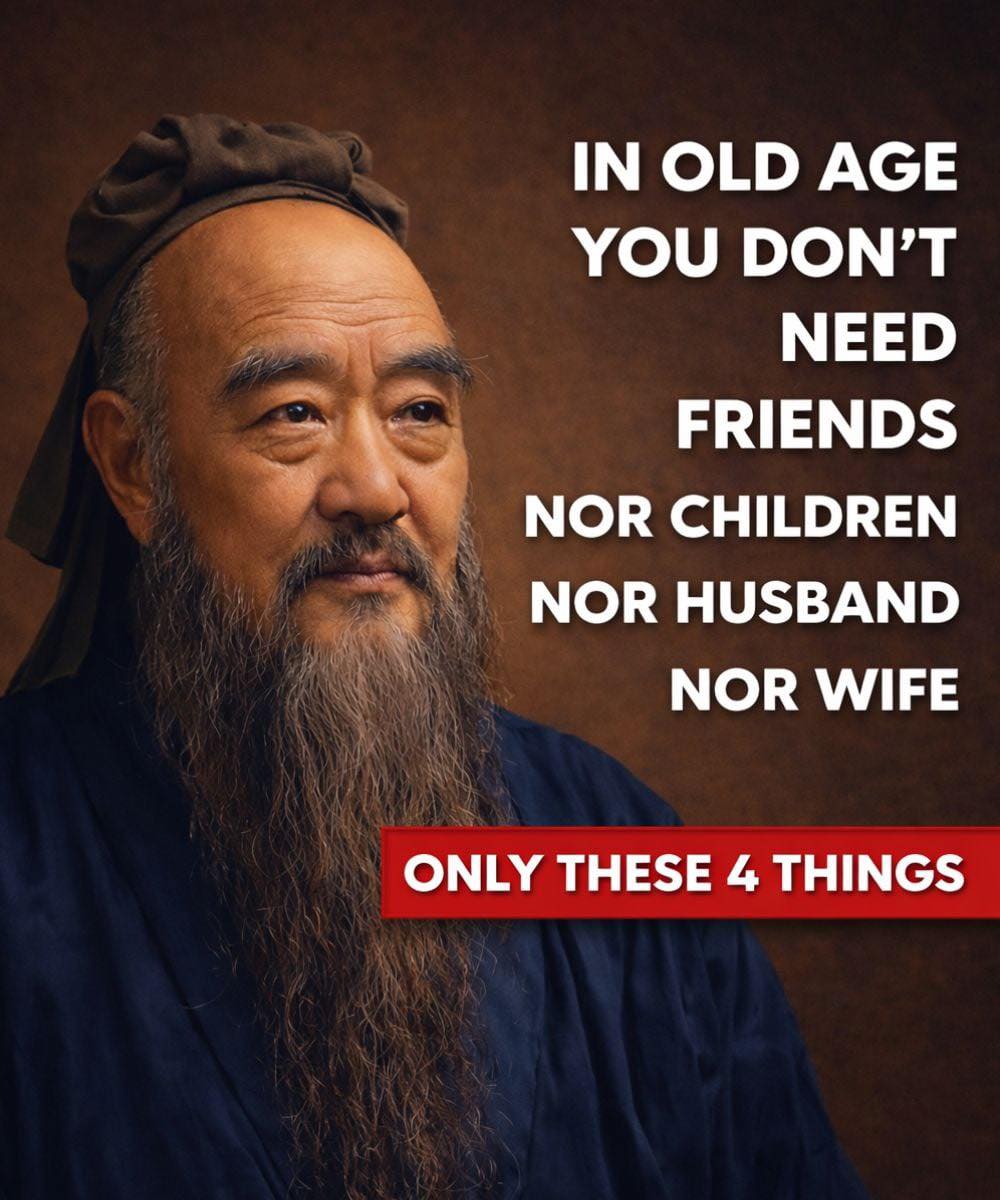
There is a fear that few people openly admit. It is not the fear of poverty, nor the fear of death. It is the fear of growing old and realizing that life was not lived in the right way. Not because of a lack of money or success, but because, deep inside, there is no peace, no meaning, no inner stability.
More than 2,500 years ago, the Chinese philosopher Confucius reflected on this human concern. He did not simply teach how to be happy in old age. He taught something far deeper: how to live in such a way that old age becomes not a burden, but the natural outcome of a life lived with integrity.
For Confucius, old age was not an ending—it was a mirror. It reflects everything a person has planted in their conscience, in their decisions, and in their relationships.
From his teachings, four essential principles emerge.
1. Personal Dignity: The Foundation of a Peaceful Old Age
Confucius believed that a noble person never loses self-respect, even if they lose everything else.
Throughout life, many people accept humiliation for convenience, stay silent for comfort, or betray their own values out of fear. In the moment, these choices may seem practical. But over time, living against oneself leaves a deep internal scar.
A serene old age is built on quiet self-respect—not aggressive pride or social appearance.
It means being able to look back without overwhelming shame. Acknowledging mistakes, but also remembering honesty. Choosing caution out of wisdom, not out of fear.
Those who preserve their dignity grow old with calmness. Even in silence, their presence carries peace.
2. Our Relationship with Time: Learning to Live in the Present
Another key principle is how we use time.
Aby zobaczyć pełną instrukcję gotowania, przejdź na następną stronę lub kliknij przycisk Otwórz (>) i nie zapomnij PODZIELIĆ SIĘ nią ze znajomymi na Facebooku.